Repetition Effort Method Explained for Hypertrophy and Strength
Repetition Effort Method Explained for Hypertrophy and Strength
You know that feeling when a set just lights up the muscle. The burn builds, reps slow down, and you’re fighting to squeeze out the last one with decent form. That’s not just suffering for the sake of it. That’s the repetition effort method doing exactly what it’s meant to do.
For a lot of lifters recreational gym-goers, bodybuilders, even strength athletes this style of training is the backbone of muscle growth. High-ish reps. Moderate weight. Sets taken close to failure. It’s familiar, it’s brutal in a good way, and it works.
But there’s more going on under the hood than just chasing a pump. When programmed well, repetition effort training builds real muscle, improves work capacity, and quietly supports long-term strength gains. Let’s break it down. No fluff. Just practical understanding you can actually use.
What Is the Repetition Effort Method?
At its core, the repetition effort method means lifting submaximal loads for higher reps and pushing those sets close to muscular failure. You’re not testing a one-rep max. You’re not moving the bar as fast as possible. You’re accumulating tension and fatigue until the muscle has no choice but to adapt.
Think loads in the 60 80% range of your one-rep max. Rep ranges anywhere from 6 up to 20 or more. The key isn’t the exact number of reps it’s the effort. Those last few reps should feel slow, grindy, and mentally demanding. But still clean.
This method became popular through powerlifting systems like Westside Barbell, where repetition effort work was used for accessory lifts to build muscle and fix weak points. Bodybuilders, of course, have been living here forever. Different cultures. Same principle.
And honestly? It’s way more accessible than maximal effort training. You don’t need perfect conditions or elite recovery. You can push hard without frying your nervous system every session. That’s a big reason it works so well for most lifters.
Repetition Effort vs. Maximal and Dynamic Effort
Maximal effort training is about lifting the heaviest weight you can handle for very low reps. Dynamic effort focuses on speed and power with lighter loads. Both have their place, especially for advanced strength athletes.
But repetition effort sits in the sweet spot. Less joint stress. More volume. More room for technical practice. And way more muscle-building stimulus for the average person. You can recover from it, repeat it weekly, and actually progress.
Why the Repetition Effort Method Builds Muscle
Muscle growth isn’t magic. It comes down to a few key mechanisms, and repetition effort training hits all of them when done right.
Mechanical tension is the big one. Even with moderate loads, muscles experience high tension when you take sets close to failure. Those later reps? They’re doing most of the work. The muscle fibers are under strain long enough to signal growth.
Then there’s metabolic stress. High-rep sets create that deep burn, cell swelling, and fatigue that bodybuilders love to hate. That environment ramps up anabolic signaling and contributes to hypertrophy over time.
Finally, motor unit recruitment. As a set drags on and fatigue builds, your body is forced to recruit higher-threshold motor units the ones tied to your biggest, strongest muscle fibers. You don’t need maximal weights to reach them. You need effort.
This is why repetition effort training works across a wide range of rep schemes. Six hard reps. Fifteen brutal ones. Different feel, similar outcome, as long as you’re close enough to failure.
The Importance of Training Close to Failure
Let’s be clear: you don’t need to fail every set. But stopping five or six reps short because it feels uncomfortable? That’s where progress stalls.
Most hypertrophy happens in the last few reps before failure. If your set ends while you still feel fresh, the stimulus just isn’t there. Learning to judge proximity to failure often called reps in reserve (RIR) is a skill. And a valuable one.
Trust me on this. One or two solid reps left in the tank is usually the money zone.
How Repetition Effort Training Supports Strength Gains
Here’s where some lifters get confused. If repetition effort is about muscle, how does it help strength?
Simple answer: bigger muscles have more potential to produce force. Increasing muscle cross-sectional area gives you a larger engine. Even if repetition work doesn’t spike your one-rep max directly, it raises your ceiling.
There’s also the work capacity factor. High-rep, near-failure sets improve your ability to handle volume. More volume means more quality practice with the lift. More practice means better technique under fatigue.
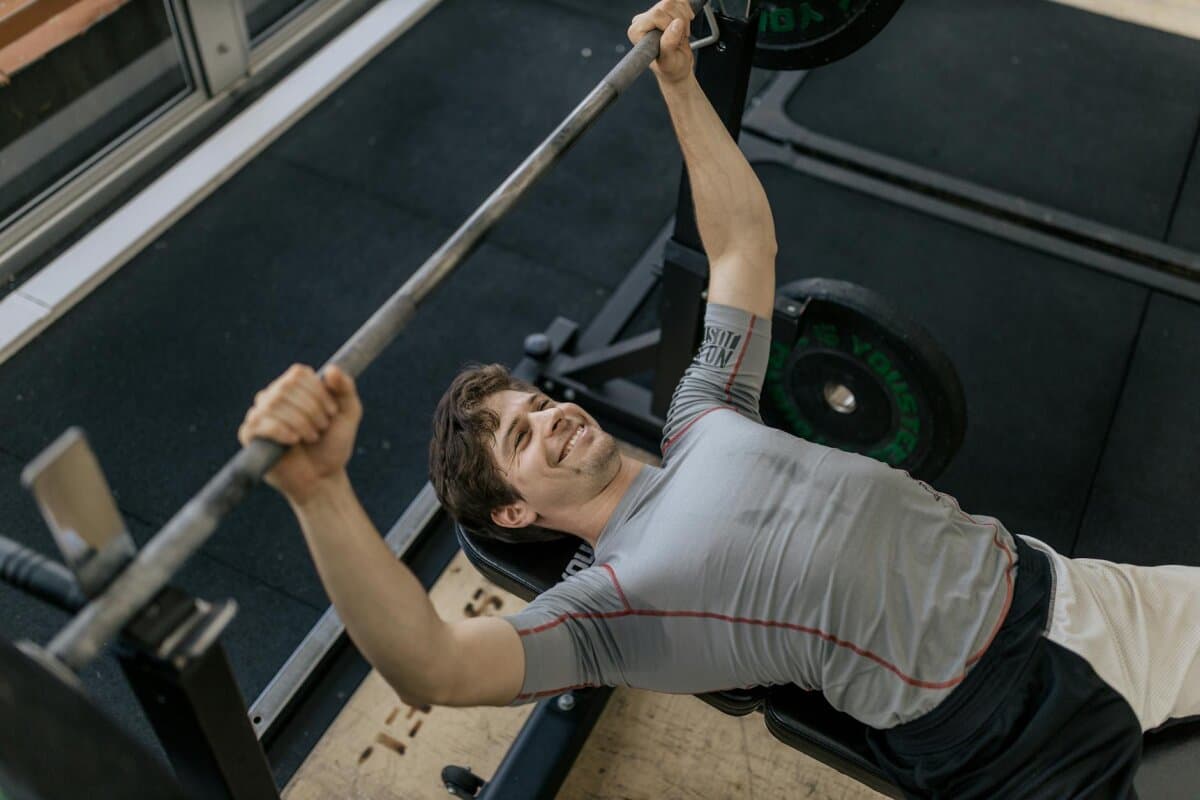
Take something like the Barbell Bench Press. Repetition effort sets reinforce bar path, tightness, and control. Over months, that carries over when heavier loads show up again.
So no, repetition effort isn’t a replacement for heavy training if strength is your main goal. But without it? Long-term progress usually stalls.
Why Bigger Muscles Matter for Strength Athletes
Strength is skill plus muscle. You can sharpen technique only so much without adding size. Repetition effort training fills that gap, especially for lifters stuck at the same numbers year after year.
Programming the Repetition Effort Method for Best Results
This is where theory meets reality. Because good repetition effort training isn’t just about doing more reps.
Rep ranges: Anywhere from 6 to 20+ reps can work. Lower reps lean more toward strength-hypertrophy crossover. Higher reps pile on metabolic stress. Both are useful.
Loading: Roughly 60 80% of your one-rep max. But percentages matter less than effort. Choose a weight that lets you approach failure with solid form.
Rest periods: Usually 60 120 seconds. Enough to breathe, not enough to feel fully recovered. Shorter rests increase fatigue. Longer rests allow heavier loads. Adjust based on the exercise.
Main lifts can use repetition effort during hypertrophy blocks. Accessories live here year-round. That’s where most lifters should focus.
Exercise Examples: Squats, Bench, RDLs, and Accessories
Lower body? High-rep sets of the Barbell Full Squat build quads and glutes while reinforcing depth and control.
Upper body pressing? The bench thrives on repetition work, especially when shoulders and triceps need size.
Hip hinges like Romanian deadlifts (no link here, but you know the one) are perfect for controlled, high-tension reps that hammer the hamstrings.
For back development, movements like the Reverse Grip Machine Lat Pulldown let you push close to failure safely. Great stretch. Great pump.
Accessories should feel hard. That’s the point.
Common Mistakes With Repetition Effort Training
More isn’t always better. That’s the first trap.
Junk volume happens when you pile on sets without enough intensity. Ten easy sets won’t beat four hard ones.
Another issue? Stopping too far from failure because you’re afraid of discomfort. Growth lives on the edge of challenge.
And soreness? It’s not a reliable indicator. You can be sore and not growing. Or growing and barely sore at all.
How to Gauge Effective Effort in the Gym
Ask yourself: could I really have done more than two reps with good form? If yes, the set was probably too easy. Learn to be honest. Your body knows.
Using the Repetition Effort Method in Popular Training Splits
One reason repetition effort training is everywhere? It fits almost any routine.
Upper/lower splits use it to hammer muscle groups twice per week without wrecking recovery. Powerbuilding programs pair heavy top sets with repetition accessories. Push-pull-legs routines live and breathe high-rep work.
No matter the split, repetition effort fills in the gaps. It’s the connective tissue between strength and size.
Balancing Recovery and Frequency
Pushing close to failure is stressful. Spread volume intelligently. Rotate exercises. And listen to your joints. Sustainable effort beats heroic burnout every time.
Final Thoughts on the Repetition Effort Method
The repetition effort method isn’t flashy. It’s not about chasing max numbers or moving weight fast. It’s about honest work, hard sets, and consistent progression.
For hypertrophy, it’s a cornerstone. For strength, it’s a quiet supporter that builds the foundation you need to keep progressing.
Train with intent. Respect recovery. Push when it counts. Do that, and repetition effort training will carry you further than you expect.
Frequently Asked Questions
Related Articles
How to Optimize Lifting Technique With Biomechanics
Biomechanics offers a smarter way to improve lifting technique by understanding how your body moves under load. By applying principles like leverage, balance, and joint alignment, lifters can build strength more efficiently while reducing injury risk. This guide shows how to use biomechanics to refine form in major compound lifts.
Velocity Based Training: Auto-Regulate Like a Pro
Velocity based training is a data-driven approach that uses bar speed to auto-regulate load, volume, and intensity. Instead of guessing based on percentages, VBT helps lifters train according to real-time performance. Learn how to apply velocity metrics to build strength, manage fatigue, and progress smarter.
Neural Drive Enhancement for Explosive Strength Training
Explosive strength is driven as much by the nervous system as by muscle size. This article explains how neural drive influences power output and how targeted training methods can improve explosive performance. Learn how to program heavy lifts, speed work, and recovery for long-term strength gains.

Fascia Stretching: Does It Really Improve Performance?
Fascia stretching has become a popular topic in fitness, often promoted as a way to boost performance and prevent injuries. This article breaks down what fascia is, how fascia-focused methods actually work, and what the research says about their real impact on strength, mobility, and recovery. Learn how to use fascia stretching as a smart addition to your training without falling for the hype.