RPE Training Explained: Autoregulation for Smarter Progress
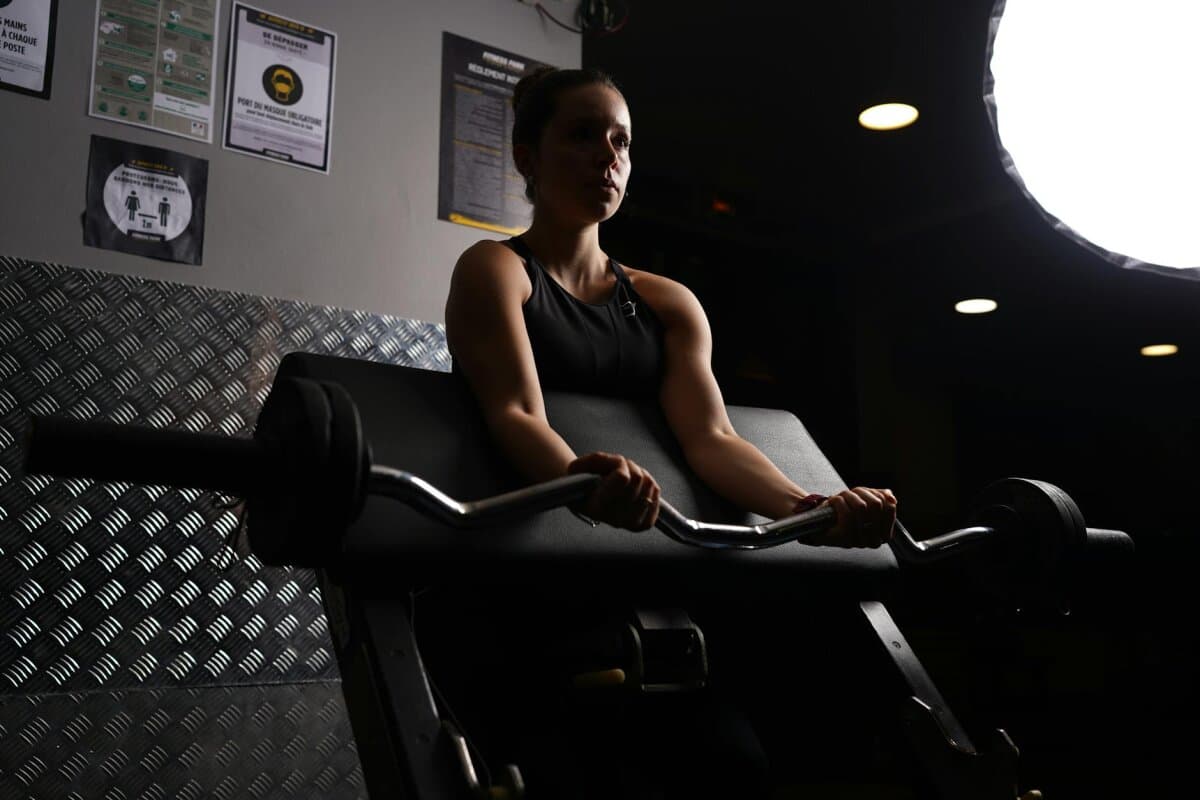
RPE Training Explained: Autoregulation for Smarter Progress
You ever follow a program to the letter… and still feel off?
Some days the weights fly. Other days, that same load feels glued to the floor. But the spreadsheet doesn’t care. It just tells you what to lift. And you lift it anyway. Sound familiar?
This is where a lot of dedicated lifters get stuck. They train hard, show up consistently, but progress stalls or fatigue creeps in. Slowly at first. Then all at once.
RPE training flips that script.
Instead of forcing your body to match the plan, RPE Rate of Perceived Exertion lets the plan adapt to you. Your recovery. Your stress. Your strength today.
If you’re a gym-goer who wants better progress without burning out, especially if you train without a coach, this matters. A lot.
What Is RPE in Strength Training?
RPE stands for Rate of Perceived Exertion. In simple terms, it’s a way to rate how hard a set feels based on how close you are to muscular failure.
The concept didn’t start in the weight room. It came from endurance sports and sports science decades ago, where athletes needed a way to gauge intensity without heart rate monitors or lab equipment.
Eventually, strength coaches caught on. Especially in powerlifting circles.
Why? Because lifting performance fluctuates. Sleep, work stress, nutrition, soreness none of that shows up in a percentage-based program. But your body feels it.
RPE gives you a language to describe that effort. And more importantly, to adjust your training without guessing.
Why Perceived Effort Matters More Than Fixed Numbers
Let’s say your program calls for 5 reps at 80%.
On a great day? That might feel like a smooth, confident set with reps left in the tank.
On a rough day? Same weight. Same reps. Completely different experience. Grinding. Form breaking down. Recovery taking a hit.
RPE acknowledges reality. It says, “Okay, how hard was that actually?”
That awareness is the foundation of smarter training.
Understanding the RPE Scale for Lifting (1 10)
For strength training, we use a 1 10 scale. But let’s be honest RPE 1 through 5 barely show up in real programs.
The money range is usually RPE 6 to 10.
Here’s how it works in practice:
- RPE 10: Max effort. No reps left. Absolute failure.
- RPE 9: You could maybe squeeze out one more rep. Maybe.
- RPE 8: Two reps left in the tank.
- RPE 7: Three reps left. Challenging, but controlled.
- RPE 6: Four reps left. Working, but far from a grind.
Anything below that? Warm-up territory.
Most main lifts like the Barbell Full Squat, Barbell Bench Press, and Barbell Deadlift live around RPE 6.5 to 9 depending on the phase.
RPE 10 to RPE 6: Real-World Set Examples
RPE 10: You unrack the bar knowing it’s a fight. The last rep slows to a crawl. No chance of another. Form barely holds. You rack it and need a minute. That’s a true max-effort set.
RPE 9: Still heavy. Still demanding. But you finish the set thinking, “Yeah… one more would’ve been ugly, but possible.”
RPE 8: This is a sweet spot for a lot of training. The reps move well, bar speed is decent, and you know you had two solid reps left.
RPE 7: Challenging but clean. You’re working, not surviving.
RPE 6: Feels like training, not testing. Perfect for building volume without crushing recovery.
If this feels fuzzy at first, that’s normal. RPE is a skill. You get better with reps. Literally.
RPE vs Reps in Reserve (RIR): What’s the Difference?
If you’ve heard coaches talk about “leaving reps in the tank,” that’s Reps in Reserve or RIR.
RIR answers one question: How many more reps could you have done?
RPE answers the same question… just from the opposite direction.
An RPE 8 set means about 2 reps in reserve. RPE 9? One rep in reserve.
That’s why you’ll often see them used interchangeably.
For hypertrophy-focused lifters, RIR can feel more intuitive. Counting remaining reps is sometimes easier than rating effort on a scale.
Simple RPE to RIR Conversion Chart Explained
- RPE 10 = 0 RIR
- RPE 9 = 1 RIR
- RPE 8 = 2 RIR
- RPE 7 = 3 RIR
- RPE 6 = 4 RIR
Same idea. Different language.
Use whichever clicks for you. The results are what matter.
Why RPE-Based Training Leads to Smarter Progress
This is where RPE really shines.
Your strength isn’t static. It fluctuates day to day. RPE-based training embraces that instead of fighting it.
Autoregulation means the load adjusts to your readiness. Feeling strong? You’ll naturally lift heavier at the same RPE. Feeling run down? The weight drops, but the stimulus stays.
That’s huge for recovery.
Training at appropriate effort levels reduces unnecessary fatigue, keeps technique cleaner, and lowers the risk of burnout. Trust me on this your joints will thank you.
Over time, this consistency adds up. Fewer forced maxes. More quality reps. Better progress.
Why RPE Is Popular in Powerlifting and Hypertrophy Programs
Powerlifters love RPE because it allows heavy training without constant testing. You can push intensity while managing fatigue across a long training cycle.
Physique-focused lifters benefit too. Hypertrophy doesn’t require failure every set. Staying around RPE 7 9 keeps tension high without wrecking recovery.
Different goals. Same principle.
How to Use RPE in Your Workouts
Let’s get practical.
You don’t slap an RPE number on every warm-up rep and call it a day. There’s a flow to it.
Warm-up sets are mostly feel-based. You’re ramping up, checking bar speed, seeing how your body responds.
As you approach working weight, you start estimating effort.
Say your program calls for 4 sets of 5 at RPE 8 on squats.
You work up to a weight that feels like you could do two more reps at the end of the set. That’s your load.
If the first set feels like RPE 7? Add weight. If it feels like RPE 9? Pull some off.
This applies across lifts from big barbell movements to accessory work like dumbbell shoulder press (no fancy math required).
Sample RPE-Based Upper/Lower Training Week
Upper Day
- Bench Press 4×6 @ RPE 8
- Row variation 3×8 @ RPE 7 8
- Shoulder Press 3×10 @ RPE 7
Lower Day
- Squat 4×5 @ RPE 8
- Deadlift 3×4 @ RPE 7 8
- Accessories RPE 6 7
The structure stays consistent. The load adapts.
Common RPE Mistakes and RPE vs Percentage Training
Let’s clear up some traps.
The biggest mistake? Training too close to failure all the time.
Many lifters think RPE 8 feels like RPE 10. Ego sneaks in. Fatigue piles up.
Another issue: beginners often lack the experience to judge effort accurately. That’s okay. It improves quickly if you’re honest with yourself.
Now, about percentages.
Percentage-based training isn’t bad. It’s predictable and works well in short, peaking-focused blocks.
But it assumes your readiness never changes. Which… yeah. Not realistic.
RPE responds to real-time feedback. Percentages follow a script.
Who Should Use RPE, Percentages, or a Hybrid Approach
If you’re intermediate or advanced, RPE is a powerful tool.
If you’re brand new, percentages can help build consistency at first.
Many lifters thrive on a hybrid approach: percentages as a guideline, RPE as the final judge.
Best of both worlds.
Final Thoughts: Is RPE Training Right for You?
RPE training isn’t magic. It won’t replace effort. But it makes your effort count.
By listening to your body and adjusting intelligently, you train hard without digging a recovery hole you can’t climb out of.
Start simple. Pick one lift. Assign a target RPE. Be honest about how it feels.
You’ll get better at it. Faster than you think.
And your progress? Smarter. More consistent. Built to last.
Frequently Asked Questions
Related Articles
How to Optimize Lifting Technique With Biomechanics
Biomechanics offers a smarter way to improve lifting technique by understanding how your body moves under load. By applying principles like leverage, balance, and joint alignment, lifters can build strength more efficiently while reducing injury risk. This guide shows how to use biomechanics to refine form in major compound lifts.
Repetition Effort Method Explained for Hypertrophy and Strength
The repetition effort method is a proven training approach that uses moderate weights and high reps taken close to failure to stimulate muscle growth. Popular in both bodybuilding and strength training systems, it builds size, work capacity, and long-term strength. Learn how to program it effectively for hypertrophy-focused results.
Velocity Based Training: Auto-Regulate Like a Pro
Velocity based training is a data-driven approach that uses bar speed to auto-regulate load, volume, and intensity. Instead of guessing based on percentages, VBT helps lifters train according to real-time performance. Learn how to apply velocity metrics to build strength, manage fatigue, and progress smarter.
Neural Drive Enhancement for Explosive Strength Training
Explosive strength is driven as much by the nervous system as by muscle size. This article explains how neural drive influences power output and how targeted training methods can improve explosive performance. Learn how to program heavy lifts, speed work, and recovery for long-term strength gains.