Sport-Specific Hypertrophy: Build Muscle That Improves Performance
Sport-Specific Hypertrophy: Build Muscle That Improves Performance
You want to be stronger. More muscular. But you also want to run fast, jump high, hit hard, or last an entire match without feeling like your legs are full of wet cement. Sound familiar?
That tension between looking athletic and actually performing like an athlete is where sport-specific hypertrophy lives. It’s the middle ground between classic bodybuilding and pure performance training. And honestly, it’s where most athletes should be.
If you play sports, compete in CrossFit, train martial arts, or just care about performance as much as aesthetics, this matters. A lot. Because not all muscle is created equal. And not all muscle growth helps you on the field, court, or mat.
What Is Sport-Specific Hypertrophy?
Sport-specific hypertrophy is muscle growth with a purpose. The goal isn’t just to make a muscle bigger it’s to make it useful for your sport.
That means building size in muscles that contribute to force production, stability, and movement patterns you actually use. Sprinting. Cutting. Throwing. Absorbing contact. Repeating efforts under fatigue.
So yes, you’ll still train for hypertrophy. Sets, reps, progressive overload. All the good stuff. But exercise choice, volume, and even where you put muscle mass are guided by performance transfer, not mirror checks.
Traditional Hypertrophy vs. Athletic Hypertrophy
Traditional bodybuilding-style hypertrophy is appearance-driven. You’re chasing symmetry, isolation, and maximal local muscle fatigue. Think chest days, arm days, and a lot of machines.
Athletic hypertrophy flips that priority. It asks a different question: Will this muscle growth help me produce or transfer force in my sport?
That’s why athletes lean harder on multi-joint lifts, unilateral work, and positions that challenge balance and coordination. The muscle still grows. It just grows in a way that plays nicer with speed, agility, and skill.
Why Bigger Muscles Don’t Always Mean Better Performance
This is where people get tripped up.
You can add ten pounds of muscle and still not jump higher. Or sprint faster. Or hit harder. Why? Because performance depends on how force is produced and where it goes.
If new muscle mass changes your mechanics, slows your rate of force development, or adds fatigue without payoff, performance can actually drop. Bigger isn’t bad but random size is.
How Muscle Size Transfers to Athletic Performance
For hypertrophy to carry over, it has to respect biomechanics. Joint angles. Timing. Coordination. This is the unsexy stuff. But it’s everything.
Muscle doesn’t act alone. It works as part of a system. When hypertrophy supports that system, performance improves. When it fights the system, you feel clunky.
Movement Patterns and Force Transfer
Sports are built on patterns: hip extension, rotation, deceleration, re-acceleration. Training that reinforces those patterns tends to transfer better.
That’s why squatting, hinging, lunging, pulling, and pressing variations dominate athletic programs. They load muscles in positions that resemble real movement.
For example, building your legs with a Bulgarian Split Squat forces each side to stabilize independently. That carries over to sprinting and change of direction far better than only using machines.
Muscle Fiber Types and Athletic Demands
Not all hypertrophy targets muscle fibers the same way.
Higher-rep, slower-tempo training tends to bias endurance-oriented fibers. Heavier loads with intent to move fast recruit more high-threshold motor units the ones tied to power.
Athletes usually need a blend. Enough volume to grow muscle, but enough intensity and intent to preserve explosiveness. That balance is where smart programming lives.
Muscle Priorities Change by Sport
This is where one-size-fits-all programs fall apart.
A soccer player, a powerlifter, and a mixed martial artist don’t need the same hypertrophy priorities. Even if they all lift weights.
The sport decides which muscles matter most, how they work, and how much fatigue you can afford.
Lower-Body Dominant Sports (Sprinting, Jumping, Field Sports)
Acceleration, top-end speed, and repeated sprint ability live in the hips and legs. Glutes. Hamstrings. Quads. Calves. All working together.
This is where squats and deadlift variations shine. A well-executed Barbell Full Squat builds thigh and hip hypertrophy while reinforcing the ability to produce force through the ground.
But volume has to be managed. Too much leg mass without power work can leave athletes strong but slow. Nobody wants that.
Upper-Body and Rotational Sports (Throwing, Combat, CrossFit)
Here, hypertrophy needs to support force transfer through the core and shoulders.
Pulling strength matters. A lot. That’s why variations of the Pull-Up show up everywhere from grappling sports to obstacle racing.
Pressing still matters too, but often in angled or unilateral patterns. Landmine presses, for example, let athletes build shoulder and chest size without wrecking joint health or locking them into one plane.
Training Variables That Drive Functional Hypertrophy
You don’t need radically different tools. You need better control over the basics.
Volume, intensity, tempo, and exercise choice determine whether hypertrophy helps or hurts performance.
Volume and Intensity for Athletes
Athletes usually sit in the middle ground.
Enough volume to stimulate growth. Enough intensity to maintain neural drive. Too much of either and recovery tanks.
Most do well with moderate rep ranges (5 10), leaving a rep or two in the tank. Grinding every set to failure might feel productive. It’s rarely smart during a season.
Exercise Selection and Planes of Motion
Machines aren’t evil. But relying on them exclusively can be a problem.
Free weights, cables, and bodyweight movements challenge stabilizers and coordination. They force muscles to work in multiple planes, which is how sports actually happen.
That’s why pairing bilateral lifts with unilateral or rotational accessories tends to produce more transferable hypertrophy.
Balancing Compound Lifts and Accessory Work
Here’s the rule of thumb: compounds build the engine, accessories fine-tune it.
You need both. Just not in equal amounts.
Foundational Lifts That Build Transferable Size
Compound lifts give you the biggest return on investment.
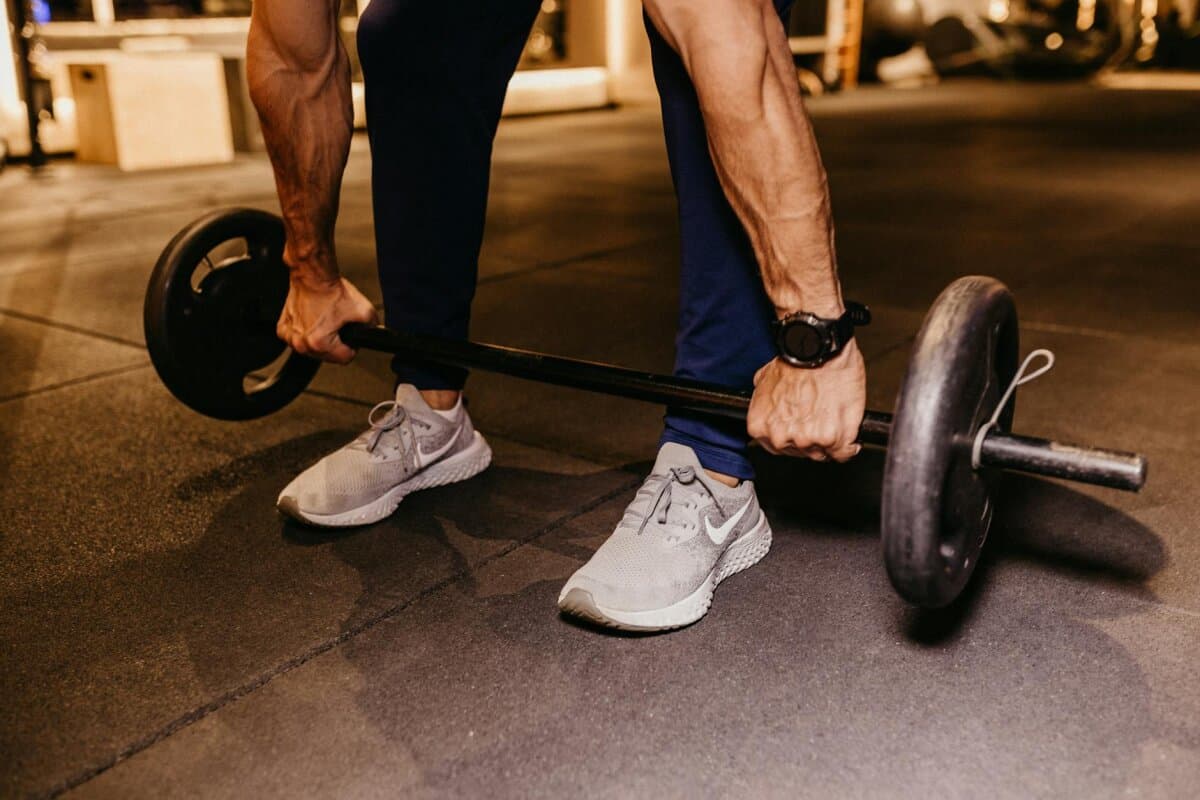
A Barbell Deadlift loads the posterior chain in a way few exercises can match. Hips, back, grip. All growing together.
Accessories then support that foundation. Split squats for asymmetries. Rows for shoulder balance. Core work that resists movement instead of creating it.
This is how you build muscle that sticks with you when intensity rises and fatigue sets in.
Common Mistakes and How to Customize Your Training
This is where a lot of well-meaning athletes go wrong.
They chase muscle wherever it’s easiest to grow, not where it’s most useful.
Overdeveloped arms that slow sprint mechanics. Excess chest volume that tightens shoulders. Endless leg days that leave no room for skill work.
Hypertrophy without context becomes noise.
How to Evaluate Your Sport’s True Muscle Needs
Start simple.
- What movements decide success in your sport?
- Where do you feel weak or unstable?
- What breaks down when fatigue hits?
Then look at your training. Are you building muscle that supports those answers or just filling out a T-shirt?
Adjust volume toward high-impact areas. Pull back on vanity work if recovery suffers. And reassess every few months. Your needs change as you improve.
Train Muscle That Actually Matters
Sport-specific hypertrophy isn’t about doing less work. It’s about doing smarter work.
You can build an impressive physique and still move well. You can get stronger without getting slower. But only if muscle growth serves performance, not the other way around.
Train with intent. Respect your sport. And remember muscle that helps you play better is always worth more than muscle that just looks good under gym lighting.
Frequently Asked Questions
Related Articles
How to Optimize Lifting Technique With Biomechanics
Biomechanics offers a smarter way to improve lifting technique by understanding how your body moves under load. By applying principles like leverage, balance, and joint alignment, lifters can build strength more efficiently while reducing injury risk. This guide shows how to use biomechanics to refine form in major compound lifts.
Repetition Effort Method Explained for Hypertrophy and Strength
The repetition effort method is a proven training approach that uses moderate weights and high reps taken close to failure to stimulate muscle growth. Popular in both bodybuilding and strength training systems, it builds size, work capacity, and long-term strength. Learn how to program it effectively for hypertrophy-focused results.
Velocity Based Training: Auto-Regulate Like a Pro
Velocity based training is a data-driven approach that uses bar speed to auto-regulate load, volume, and intensity. Instead of guessing based on percentages, VBT helps lifters train according to real-time performance. Learn how to apply velocity metrics to build strength, manage fatigue, and progress smarter.
Neural Drive Enhancement for Explosive Strength Training
Explosive strength is driven as much by the nervous system as by muscle size. This article explains how neural drive influences power output and how targeted training methods can improve explosive performance. Learn how to program heavy lifts, speed work, and recovery for long-term strength gains.