Time Under Tension: Does Slower Lifting Build More Muscle?
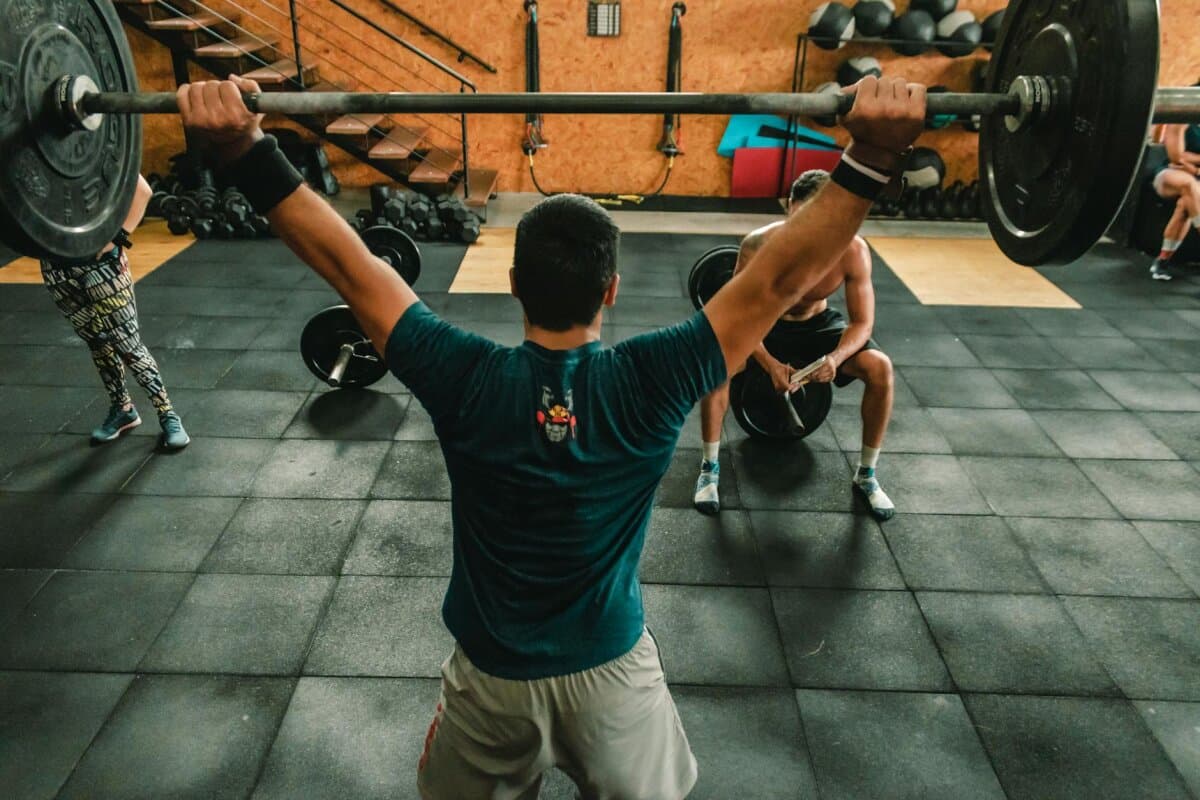
Time Under Tension: Does Slower Lifting Build More Muscle?
You’ve probably heard it in the gym. Or seen it on Instagram, slow-motion reps with dramatic music in the background.
“Slow it down.”
“Feel the muscle.”
“More time under tension equals more gains.”
Sounds convincing, right? And to be fair, sometimes it works. Other times… not so much. That’s where things get confusing. Coaches say one thing. Influencers say another. Research papers seem to say something else entirely.
So what’s the truth here? Does lifting slower actually build more muscle? Or is time under tension just another buzzword that got oversimplified?
Let’s break it down. No fluff. No extremes. Just how time under tension really fits into hypertrophy training and how you should actually use it.
What Is Time Under Tension?
Time under tension (usually shortened to TUT) is exactly what it sounds like: the amount of time a muscle is under load during a set.
If you do 10 reps of a curl and each rep takes 4 seconds, that set has about 40 seconds of time under tension. Simple math. But the application? That’s where people start to mess it up.
TUT became popular in bodybuilding circles decades ago, long before TikTok and YouTube coaching. Old-school physique athletes noticed that controlled reps especially slower negatives made muscles feel fuller, more fatigued, and honestly… more connected.
And that led to a big assumption: if more tension time feels harder, it must be better for growth.
Sometimes that’s true. Sometimes it’s not. The mistake is thinking that just moving the weight slowly is the goal. It’s not.
How Time Under Tension Is Calculated
TUT is usually measured per set, not per workout.
- 3 seconds down + 1 second up for 10 reps = ~40 seconds TUT
- 2 seconds down + explosive up for 10 reps = ~30 seconds TUT
Most hypertrophy-focused sets naturally land somewhere between 30 and 60 seconds. That’s not magic. It’s just where moderate loads and challenging reps tend to fall.
What matters more than hitting an exact number is how that time is created. Control. Effort. And enough load to actually challenge the muscle.
The Three Phases of a Lift and Their Role in Muscle Growth
Every rep you perform has three phases. Miss one, and you’re leaving growth on the table.
Eccentric phase: lowering the weight. Think the descent of a squat or the lowering of a curl.
Concentric phase: lifting the weight. Standing up from a squat, pressing the bar off your chest.
Isometric phase: holding the weight still. Pauses at the bottom or top of a rep.
All three contribute to hypertrophy, but not equally.
The eccentric phase usually produces the most mechanical tension and muscle damage per unit of effort. That’s why slow negatives feel brutal and why soreness loves them.
The concentric phase is where force production happens. This is where strength lives. And strength matters because stronger muscles can handle heavier loads over time.
Isometrics? Great for control and joint stability, but rarely the main driver of size on their own.
Eccentric vs. Concentric: Which Matters More?
If you had to emphasize one phase for hypertrophy, eccentrics would probably win.
But and this is a big but slowing the eccentric too much can backfire. Extremely slow negatives reduce how much weight you can use and how many quality reps you can perform.
That’s why controlled eccentrics (think 2 4 seconds) tend to outperform ultra-slow ones. Enough tension. Enough load. Enough volume.
It’s also why lifts like the Barbell Bench Press or Barbell Full Squat benefit from control but still reward intent and power on the way up.
What Does Science Say About Slow Lifting and Hypertrophy?
This is where the internet arguments usually start. One study says slow lifting works. Another says it doesn’t. So what’s going on?
When you zoom out and look at the body of research, a pattern shows up.
Moderate tempos work great for muscle growth. Extremely slow tempos don’t seem to add extra benefits and often reduce results.
Studies comparing very slow lifting (like 8 10 seconds per rep) to normal or controlled tempos usually find similar or worse hypertrophy, especially when total volume drops.
Why? Because muscle doesn’t just respond to time. It responds to tension, effort, and progression.
Research on Training Tempo and Muscle Size
Most hypertrophy research suggests that reps lasting anywhere from about 2 to 6 seconds total are effective. Outside of that range, gains don’t improve and sometimes decline.
What really matters is intent. Trying to move the weight forcefully on the concentric, even if it moves slowly because it’s heavy, produces higher muscle activation than intentionally crawling through the rep.
So yes, control your reps. But don’t baby them.
A slow lift without sufficient load is just cardio with weights. Harsh, but true.
Time Under Tension vs. Key Drivers of Hypertrophy
Muscle growth doesn’t happen because of one variable. It happens because several things stack together.
Mechanical tension: how much force the muscle produces under load.
Metabolic stress: that burning, pumped feeling from repeated contractions.
Muscle damage: small-scale structural disruption that signals repair and growth.
Time under tension interacts with all three but it doesn’t replace them.
You can have high TUT with light weights and minimal mechanical tension. And you can have high mechanical tension with shorter TUT if the load is heavy enough.
This is why load and volume still matter more than tempo alone.
Why Mechanical Tension Still Reigns Supreme
If you’re chasing size, mechanical tension is still the king.
TUT is just one way to increase it especially through controlled eccentrics and extended sets. But without progressive overload, it stalls quickly.
You don’t grow just because a set feels hard. You grow because the muscle is forced to adapt to increasing demands over time.
When Increasing Time Under Tension Actually Makes Sense
So is time under tension useless? Not at all.
It’s just situational.
Slower tempos shine in isolation exercises, where the goal is to target a specific muscle without cheating. Think curls, leg extensions, or lateral raises.
They’re also helpful during rehab phases, deloads, or hypertrophy-focused blocks where joint stress needs to be managed.
And yes, they’re great for improving mind-muscle connection. Feeling the muscle work isn’t mandatory but it helps many lifters train with better intent.
Exercises Where TUT Is Most Useful
Isolation movements and lighter compound variations respond best.
Controlled rows, curls, and even pause reps on movements like the Barbell Deadlift can increase awareness and tension without wrecking recovery.
On big lifts, though, too much slowing down usually means less weight and less progress.
Practical Tempo Guidelines for Muscle Growth
Let’s get practical. What should you actually do in the gym?
For most hypertrophy work, a simple guideline works well:
- 2 4 seconds on the eccentric
- Controlled but powerful concentric
- Minimal pauses unless used intentionally
This naturally places your sets in that 30 60 second TUT range without forcing it.
Use heavier loads and faster intent on compound lifts. Use slower tempos on isolation work where load is limited anyway.
And remember tempo is a tool, not a religion.
Sample Tempo Recommendations by Exercise Type
- Squats: 2 3 seconds down, drive up with intent
- Bench Press: Controlled descent, strong press
- Curls: Slower eccentrics, full range
- Leg extensions: Constant tension, minimal rest at lockout
Adjust based on how your joints feel, how strong you are, and what phase of training you’re in.
Final Takeaway: Should You Lift Slower to Build Muscle?
Slower lifting isn’t magic. And faster lifting isn’t the enemy.
Time under tension can support hypertrophy when it increases meaningful tension and effort. But chasing slow reps for their own sake often limits load, volume, and long-term progress.
Control your weights. Feel your muscles work. But still challenge yourself to get stronger.
That balance between control and intent is where muscle growth actually lives. Trust me on this.
Frequently Asked Questions
Related Articles
How to Optimize Lifting Technique With Biomechanics
Biomechanics offers a smarter way to improve lifting technique by understanding how your body moves under load. By applying principles like leverage, balance, and joint alignment, lifters can build strength more efficiently while reducing injury risk. This guide shows how to use biomechanics to refine form in major compound lifts.
Repetition Effort Method Explained for Hypertrophy and Strength
The repetition effort method is a proven training approach that uses moderate weights and high reps taken close to failure to stimulate muscle growth. Popular in both bodybuilding and strength training systems, it builds size, work capacity, and long-term strength. Learn how to program it effectively for hypertrophy-focused results.
Velocity Based Training: Auto-Regulate Like a Pro
Velocity based training is a data-driven approach that uses bar speed to auto-regulate load, volume, and intensity. Instead of guessing based on percentages, VBT helps lifters train according to real-time performance. Learn how to apply velocity metrics to build strength, manage fatigue, and progress smarter.
Neural Drive Enhancement for Explosive Strength Training
Explosive strength is driven as much by the nervous system as by muscle size. This article explains how neural drive influences power output and how targeted training methods can improve explosive performance. Learn how to program heavy lifts, speed work, and recovery for long-term strength gains.