Training to Failure: When It Helps and When It Hurts
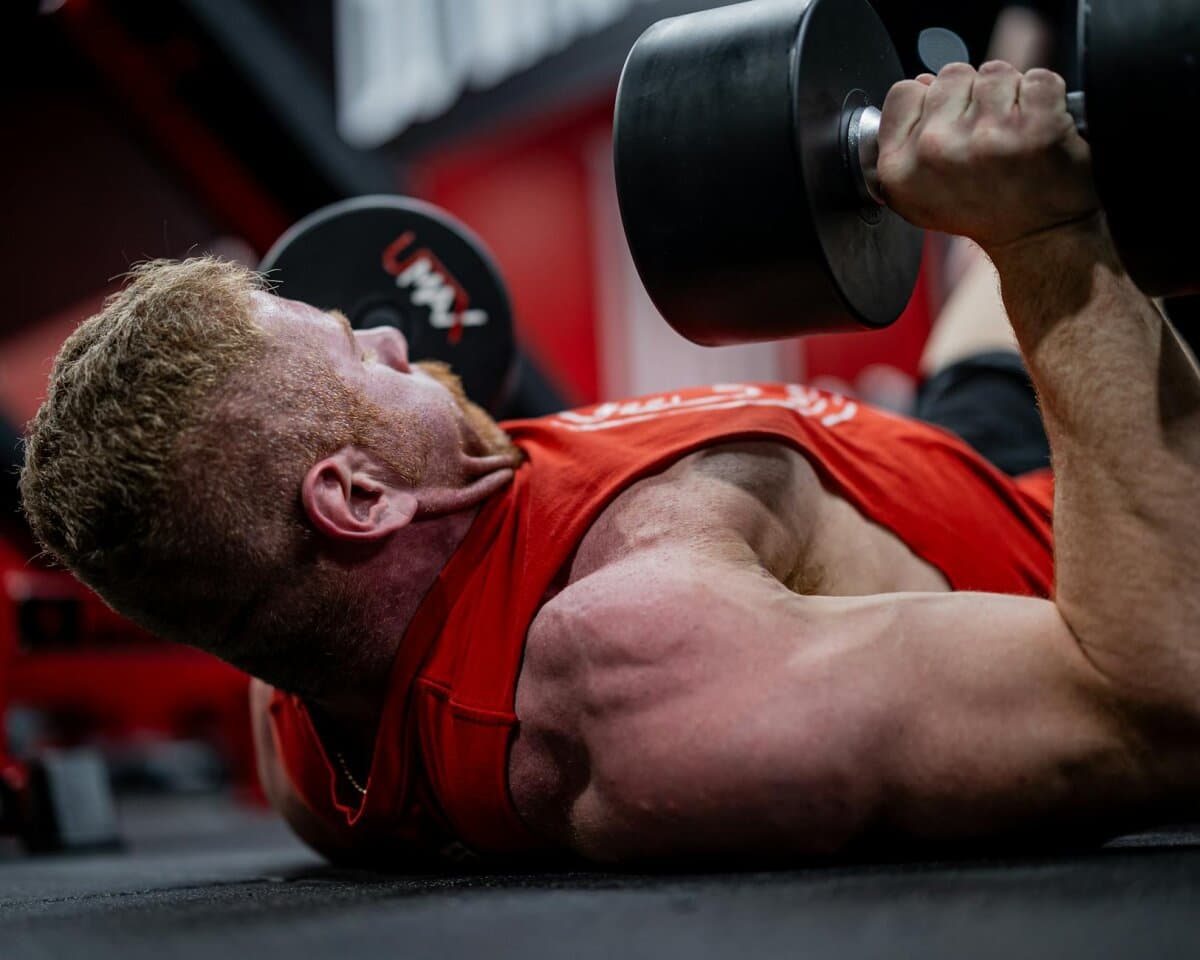
Few topics spark more gym-floor arguments than training to failure. You’ve heard it all. Old-school bodybuilders swear you’re not working hard enough unless the bar literally pins you. Science-based coaches tell you to stop a few reps short. And then Instagram throws someone screaming through a set like pain itself equals progress.
So… who’s right?
The truth is messier. Training to failure can be a powerful tool. It can also quietly wreck your recovery, stall your progress, and make you dread training if you misuse it. And a lot of lifters do.
This article isn’t here to demonize failure or glorify it. The goal is clarity. What failure actually means, how it affects muscle and strength, when it makes sense, and when it’s doing more harm than good. Because once you understand that, your training gets simpler. And better.
What Does Training to Failure Actually Mean?
Let’s clean up the definition first, because this is where most confusion starts.
Training to failure means reaching the point in a set where you can’t complete another rep with proper form, no matter how hard you try. Not “it burns.” Not “this feels heavy.” Actual failure.
Sounds straightforward. But in practice, lifters use the word “failure” to describe very different things. That’s why one person says they train to failure every workout and feels fine… while another crashes and burns doing the same thing.
Failure isn’t a single on/off switch. It’s a spectrum.
Muscular Failure vs. Technical Failure vs. Absolute Failure
Muscular failure is when the target muscle simply can’t produce enough force to finish another rep. You try. It doesn’t move. Form stays mostly intact.
Technical failure happens earlier. You could maybe grind out another rep, but form would break down hips shooting up, elbows flaring, momentum taking over. For most lifters, this is where a set should end.
Absolute failure is the ugly stuff. Cheating reps, forced reps, partners grabbing the bar, joints taking the load. This is the most fatiguing and the least repeatable.
Most research and smart coaching refers to muscular or technical failure. Absolute failure? That’s a sometimes-food, not a staple.
How Training to Failure Affects Muscle Growth, Strength, and Recovery
Why do people chase failure in the first place? Because it feels productive. And to be fair, there’s a reason for that.
Training close to failure increases motor unit recruitment. More muscle fibers get involved as fatigue builds. That’s a good thing for hypertrophy.
But here’s the catch: pushing all the way to failure doesn’t automatically mean more growth. Past a certain point, you’re just piling on fatigue muscular, joint, and nervous system fatigue without adding much extra stimulus.
And recovery isn’t infinite. Miss that part, and your progress pays the price.
Hypertrophy vs. Strength: Different Outcomes, Different Needs
For muscle growth, sets taken close to failure tend to work just as well as sets taken to full failure, especially when volume is matched. That means stopping with 1 2 reps left in the tank can still grow muscle like crazy.
Strength is different. Maximal strength thrives on high-quality reps, consistent technique, and managing fatigue. Grinding failure reps on heavy lifts often interferes with that.
And then there’s recovery. Training to failure increases muscle damage and central fatigue. Do it too often, and suddenly you’re sore all the time, motivation dips, and weights stall. You’ve probably been there. Trust me on this.
When Training to Failure Can Be Helpful
Alright. Let’s talk about where failure actually shines.
Training to failure works best when the risk is low and the target muscle is clear. That’s why it pairs so well with isolation work and machines.
It’s also useful for advanced lifters who already know their limits. If you’ve been training for years, you’re better at recognizing true failure versus discomfort. Beginners? Not so much.
Failure can also increase stimulus when volume is limited. Short on time? One hard set to failure on the right exercise can go a long way.
Examples: Bicep Curls, Leg Extensions, and Lat Pulldowns
Think about something like a dumbbell bicep curl. When you fail, the weight just… doesn’t come up. No bar crashing. No spine under load. That’s a relatively safe place to push.
Same idea with leg extensions. Your quads light up, the burn is real, but the systemic fatigue is low. You can recover.
Machine-based pulling movements like a lat pulldown also work well. A controlled failure on a Reverse Grip Machine Lat Pulldown can absolutely hammer your back without wrecking the rest of your session.
Used sparingly, failure here can be a hypertrophy booster. Not mandatory. But useful.
When Training to Failure Hurts Progress
This is where most people get tripped up.
If you’re a beginner, training to failure is usually a bad idea. You’re still learning technique, building work capacity, and figuring out what effort actually feels like. Pushing every set until things fall apart just reinforces sloppy reps.
Failure is also problematic on heavy compound lifts. These movements load a lot of muscle, joints, and your nervous system all at once. Recovery cost skyrockets.
And if you’re training with high frequency multiple sessions per week for the same muscle constant failure is a fast track to plateaus. Or worse, burnout.
Why Squats and Bench Press Rarely Benefit From Failure
Let’s be real. Missing a rep on a squat or bench press isn’t just uncomfortable it can be dangerous.
On a Barbell Full Squat, failure often turns into spinal flexion, collapsing knees, or dumping the bar. None of that builds muscle better.
The Barbell Bench Press has its own risks. Grinding to failure increases shoulder stress and nervous system fatigue, especially when done frequently.
These lifts respond better to stopping a rep or two early, keeping technique crisp, and letting volume not suffering drive progress.
Reps in Reserve (RIR): A Smarter Alternative to Failure
This is where RIR comes in.
Reps in Reserve simply means how many reps you could have done if you pushed harder. Finish a set and think, “I had two more in me”? That’s 2 RIR.
Most lifters grow extremely well training in the 0 3 RIR range. Close enough to failure to recruit muscle fibers. Far enough away to recover and repeat quality work.
It’s less flashy. But it’s sustainable. And sustainability is what actually builds physiques.
How to Estimate RIR in Real Training Sessions
At first, you’ll guess wrong. That’s normal.
Over time, patterns emerge. If your reps slow dramatically and form starts to fade, you’re probably at 1 2 RIR. If the bar speed stays snappy, you’re farther away.
The key is honesty. Not ego. Nobody gets bigger pretending a 5 RIR set was brutal.
How to Program Training to Failure Intelligently
Failure works best as a seasoning, not the whole meal.
Most lifters do well keeping compounds at 1 3 RIR and allowing failure on select isolation movements. Especially toward the end of a session, when the heavy work is done.
This approach fits naturally into push-pull-legs and bodybuilding-style splits, where accessory work carries a lot of the hypertrophy load.
And yes, isolation finishers taken to failure can feel amazing. The pump. The burn. Just don’t let them sabotage tomorrow’s workout.
Failure Placement: End of Sessions, Not Every Set
If you’re going to hit failure, save it for the last set or two. One muscle. One movement.
That way you get the stimulus without dragging fatigue through your entire week. Simple. Effective.
Final Takeaway: Failure Is a Tool, Not a Rule
Training to failure isn’t evil. It’s also not mandatory.
Most lifters grow best by training close to failure most of the time, touching true failure occasionally, and avoiding it entirely on lifts where the cost outweighs the benefit.
Progress doesn’t come from how much you suffer in a single set. It comes from stacking quality sessions, week after week, without burning out.
Use failure when it helps. Skip it when it hurts. And keep showing up.
Frequently Asked Questions
Related Articles
How to Optimize Lifting Technique With Biomechanics
Biomechanics offers a smarter way to improve lifting technique by understanding how your body moves under load. By applying principles like leverage, balance, and joint alignment, lifters can build strength more efficiently while reducing injury risk. This guide shows how to use biomechanics to refine form in major compound lifts.
Repetition Effort Method Explained for Hypertrophy and Strength
The repetition effort method is a proven training approach that uses moderate weights and high reps taken close to failure to stimulate muscle growth. Popular in both bodybuilding and strength training systems, it builds size, work capacity, and long-term strength. Learn how to program it effectively for hypertrophy-focused results.
Velocity Based Training: Auto-Regulate Like a Pro
Velocity based training is a data-driven approach that uses bar speed to auto-regulate load, volume, and intensity. Instead of guessing based on percentages, VBT helps lifters train according to real-time performance. Learn how to apply velocity metrics to build strength, manage fatigue, and progress smarter.
Neural Drive Enhancement for Explosive Strength Training
Explosive strength is driven as much by the nervous system as by muscle size. This article explains how neural drive influences power output and how targeted training methods can improve explosive performance. Learn how to program heavy lifts, speed work, and recovery for long-term strength gains.