Thumb Stretch Exercise Images
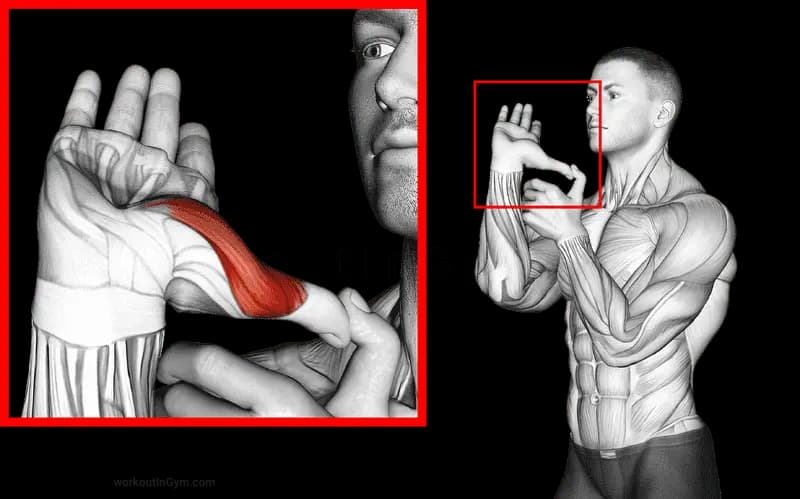
Showing step 1 of 2
Thumb Stretch
Target Muscles
Primary:
Equipment Required
Exercise Type
Time (Seconds)
How To Do
Stand upright and raise one hand in front of you with your palm open and fingers extended. Using your other hand, gently pull back on your thumb to stretch it away from your palm until you feel a gentle stretch in your thumb and forearm. Hold the stretch without forcing the movement, then switch hands.
Step-by-Step Instructions
- Stand upright with your feet shoulder-width apart and your arms relaxed by your sides.
- Raise one hand in front of you, keeping your palm open and fingers extended.
- Use the opposite hand to gently pull back on the thumb of the raised hand, stretching it away from the palm.
- Hold the stretch for 15-30 seconds, ensuring you feel a gentle stretch in the thumb and palm area.
- Release the stretch and return your hand to the starting position.
- Repeat the stretch on the opposite hand.
- Perform the stretch 2-3 times on each hand as part of your mobility or recovery routine.
Related Exercises
Explore more forearm exercises or bodyweight exercises in our exercise library.
Alternative Exercises


Frequently Asked Questions
- What muscles does the Thumb Stretch target?
- The Thumb Stretch primarily works the muscles and tendons in the forearm that control thumb movement. It also gently stretches the connective tissue in the thumb itself, helping to improve mobility and flexibility. While it doesn’t directly strengthen the muscles, it supports recovery and reduces tension from repetitive use.
- Do I need any equipment for the Thumb Stretch?
- No equipment is required for the Thumb Stretch just your hands. You can perform it anywhere, making it ideal for home, office, or travel. If you prefer, you can use a soft resistance band to add a slight pulling force for advanced mobility work.
- Is the Thumb Stretch suitable for beginners?
- Yes, the Thumb Stretch is safe and easy for beginners when performed gently. It’s a low-impact mobility drill that requires no strength or advanced skills. Beginners should focus on holding a mild stretch without pulling too hard to avoid discomfort.
- What are common mistakes to avoid when doing the Thumb Stretch?
- The most common mistake is pulling the thumb too far, which can strain the ligaments. Avoid jerky movements and keep the stretch slow and controlled. Another mistake is letting the wrist bend excessively instead of isolating the thumb keep your wrist in a neutral position.
- How long should I hold the Thumb Stretch for best results?
- Hold each stretch for about 15–30 seconds, repeating 2–3 times per hand. This duration is enough to promote flexibility without overextending the joint. Include it in your warm-up or recovery routine as needed.
- Are there safer ways to do the Thumb Stretch if I have wrist pain?
- If you have wrist pain, support your hand on a table and stretch the thumb gently with the other hand. Keep the stretch mild and within a pain-free range to avoid aggravating the joint. If discomfort persists, stop and consult a physiotherapist.
- Are there variations of the Thumb Stretch for advanced mobility work?
- Yes, advanced variations include using a resistance band to pull the thumb gently or combining the stretch with wrist rotation. You can also perform dynamic thumb movements before holding a static stretch to warm up the tendons. These progressions help improve range of motion for athletes and musicians.